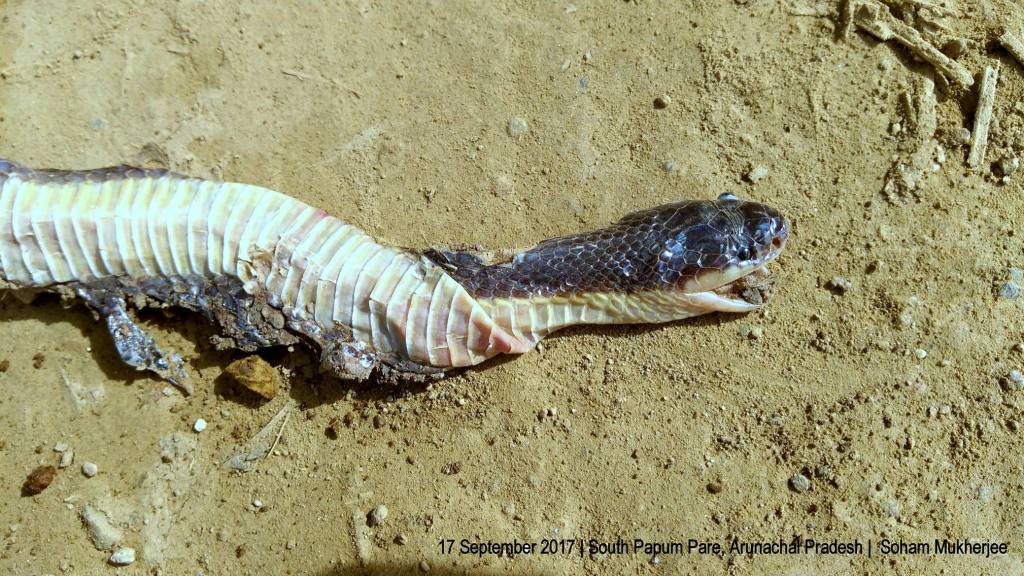
You can learn a lot about a landscape by what you flatten on the road.
Roadkill is one of those issues everyone agrees is “very sad,” right before they accelerate past the next warning sign at 90 km/h. It’s also vastly underreported, underestimated, and treated as if it were some unavoidable act of nature rather than a direct by-product of the way we carve up habitats. Wildlife doesn’t vanish because it wants to. It vanishes because we make survival unnecessarily difficult. When we push roads through habitats without seriously thinking about the animals that live there, we are effectively building a continuous, unmarked trap.

Landscapes are changing faster than resident wildlife can adapt. Access roads turn into highways, village paths turn into racing strips, irrigation canals slice through what used to be continuous habitat. Animals still need to cross—because food, water, shelter, mates, and territory aren’t conveniently arranged on one side of the road—what used to be a continuous home range has suddenly become a fragmented jigsaw with hard-edged lines of death in between.
Some species respond to speeding vehicles exactly as they would to a large predator – they freeze – it might work against a stalking predator that loses interest if you hold still. It does not work against a bus driver running late. Fleeing is the other strategy: many animals accelerate, sprinting across the road as if they are trying to outrun a slightly more complicated leopard. The problem is that a two-tonne vehicle travelling at highway speed obeys physics, not predator–prey rules. Evolution never prepared them for that particular opponent, and it shows. – unsurprisingly, they also die.
As if that weren’t enough, reptiles manage to make it worse simply by being reptiles. Warm-blooded species avoid hot tar; cold-blooded ones see it as a free basking pad. On cool days, snakes and lizards stretch out on the asphalt to absorb heat, turning themselves into highly visible, highly vulnerable targets. The road provides exactly what their physiology wants and exactly what their survival does not.

In many areas, reptiles and amphibians make up the bulk of roadkill, with small mammals and birds close behind. During the monsoon, the situation becomes farcical. Fields and low-lying lands flood; roads, built slightly higher, remain dry. To frogs and toads, that raised strip appears to be the only refuge in a temporary wetland. To drivers, it is the only fast route through a temporary mess. The clash is inevitable and, at this point, entirely predictable.
You would expect that such a widespread source of mortality would at least be well-documented. It is not. There is a strong bias towards reporting charismatic victims—large snakes, carnivores, the occasional ungulate—while the smaller, less “interesting” species are quietly removed by scavengers, tyres, or municipal cleaning. They vanish without data, without photographs, without outrage. Ecologically, however, the system misses them just as much.
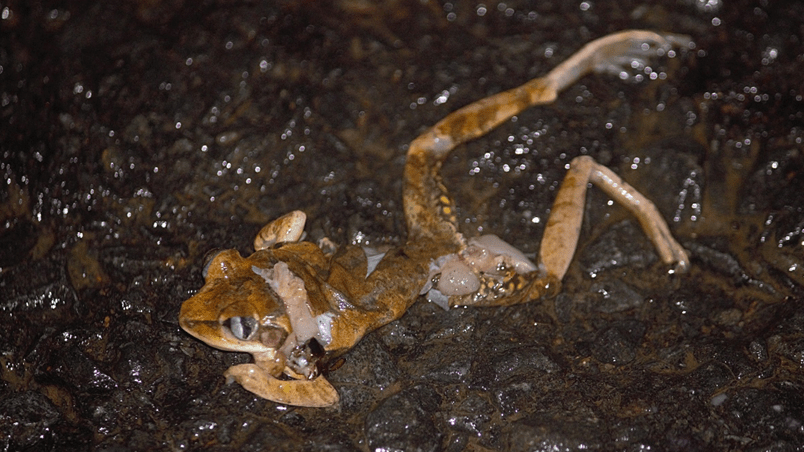
The irony is that roadkill, grim as it is, can be an extraordinarily useful source of information. Systematically documenting what is killed, where, and when can reveal species distributions, movement corridors, seasonal patterns, and hotspots of conflict. It can tell us which stretches of road are the most damaging, which times of year are the worst, and which taxa are most at risk. In other words, it hands us a map of the problem and a set of clues for how to fix it—provided we are willing to look.
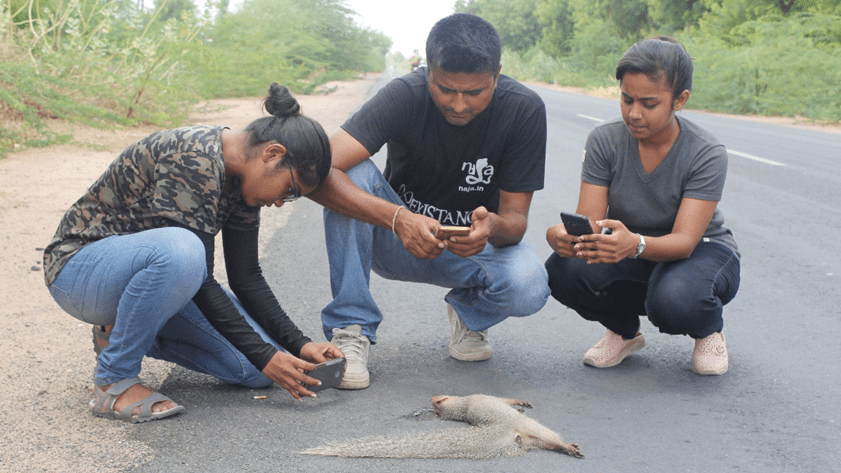
We also know, quite well by now, what helps. Speed limits that are actually enforced. Properly placed warning signs that mean something, not just decorative silhouettes of deer. Speed bumps in strategic locations. Underpasses and overpasses designed with wildlife in mind. Fencing that guides animals towards safe crossings instead of funnelling them into danger. Community awareness so that local drivers understand why “just a snake” or “just a frog” still matters.
None of this qualifies as radical innovation. It falls firmly into the category of “things we could do if we bothered.”
Instead, roads are still celebrated almost exclusively as symbols of progress and connectivity. Ribbon cuttings, not impact assessments, get the attention. For humans, roads are arteries of opportunity. For wildlife, they are fractures—thin lines that widen over time, cutting populations into smaller, more isolated fragments. The bodies on the road are a symptom, not an accident.
The point is not that roadkill will ever be reduced to zero. It will not. The point is that we currently tolerate levels of wildlife mortality that we would never accept if the victims were pets, livestock, or anything we felt personally responsible for. Because roadkill mostly happens out there, to animals we do not know, it becomes distant, abstract, and weirdly easy to ignore.
But each collision is a data point, and collectively they tell a very clear story about the cost of how we build. Ignoring that story does not make it go away. It just means the same patterns repeat, year after year, kilometre after kilometre.
As long as wildlife has to navigate the increasingly messy overlap between natural habitat and human infrastructure, animals will keep crossing roads. The real question is whether we intend to keep designing those roads as though the animals are invisible—and then act surprised by the outcome.
Shared landscapes come with shared responsibility. At the moment, the roads are holding up their end of the bargain. We are not.
 WILDROOST
Leave a comment