Budgerigars, also known as parakeets or budgies, are small, social birds native to Australia that are popular as pets. Hand-raising budgerigar babies can be a rewarding experience, but it requires a lot of time and dedication. This article provides a comprehensive overview of the steps involved in hand-raising a one-week-old budgerigar, as well as some tips for success.
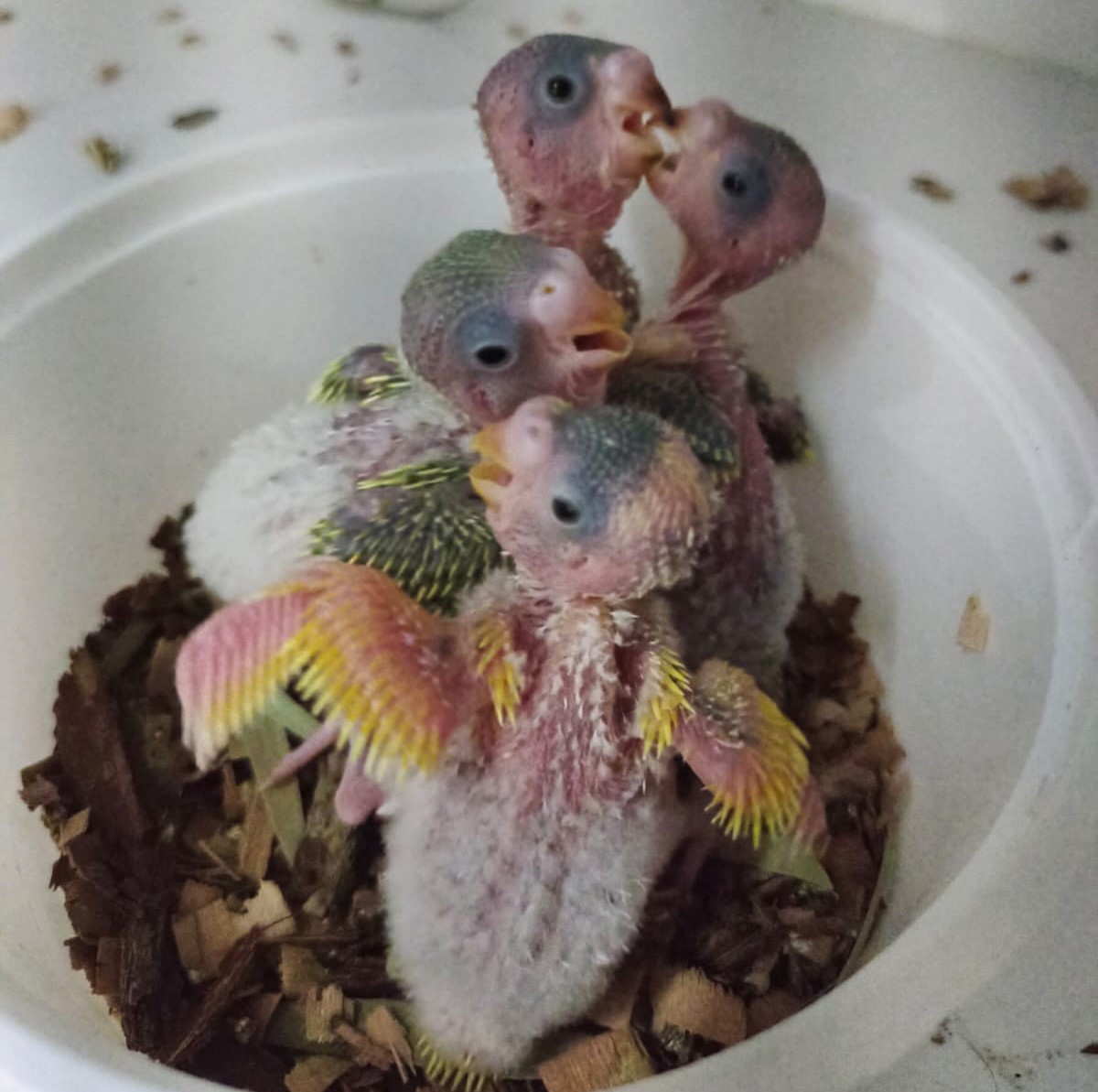
There are several circumstances in which you may need to hand-raise budgerigar babies:
The parents are unable or unwilling to feed the babies: Sometimes, the parents of budgerigar babies may be unable or unwilling to feed them properly. This can be due to various factors, such as illness, injury, or lack of experience. In these cases, it may be necessary to hand-raise the babies to ensure they receive proper nutrition.
The babies have been abandoned or orphaned: If the parents of budgerigar babies abandon or die, the babies may need to be hand-raised to ensure their survival.
The babies are too young to feed themselves: Budgerigar babies are dependent on their parents for food until they are old enough to feed themselves. If the parents are unable to feed the babies, or if the babies are orphaned at a young age, they may need to be hand-raised until they are able to feed themselves.
The babies have special needs: Some budgerigar babies may have special needs that require extra care and attention. For example, they may have physical disabilities or medical conditions that prevent them from feeding themselves. In these cases, hand-raising the babies may be necessary to ensure they receive the care they need.
Supplies and Preparation
Before you begin hand-raising a budgerigar baby, it’s important to have all the necessary supplies on hand. You’ll need a brooder (a small, enclosed space with a heat source), a feeding syringe, a formula specifically designed for hand-feeding baby birds, and a small dish for mixing the formula. You’ll also need a soft, clean cloth to wrap the baby in while you’re feeding it. It’s also important to be prepared for the time and effort required to hand-raise a budgerigar baby. This process can be time-consuming and demanding, and it’s not something to be undertaken lightly. Make sure you have the time and resources to devote to the process before you begin.
Feeding Techniques and Schedules
Proper feeding is crucial for the health and development of hand-raised budgerigar babies. Here are some tips for successful feeding:
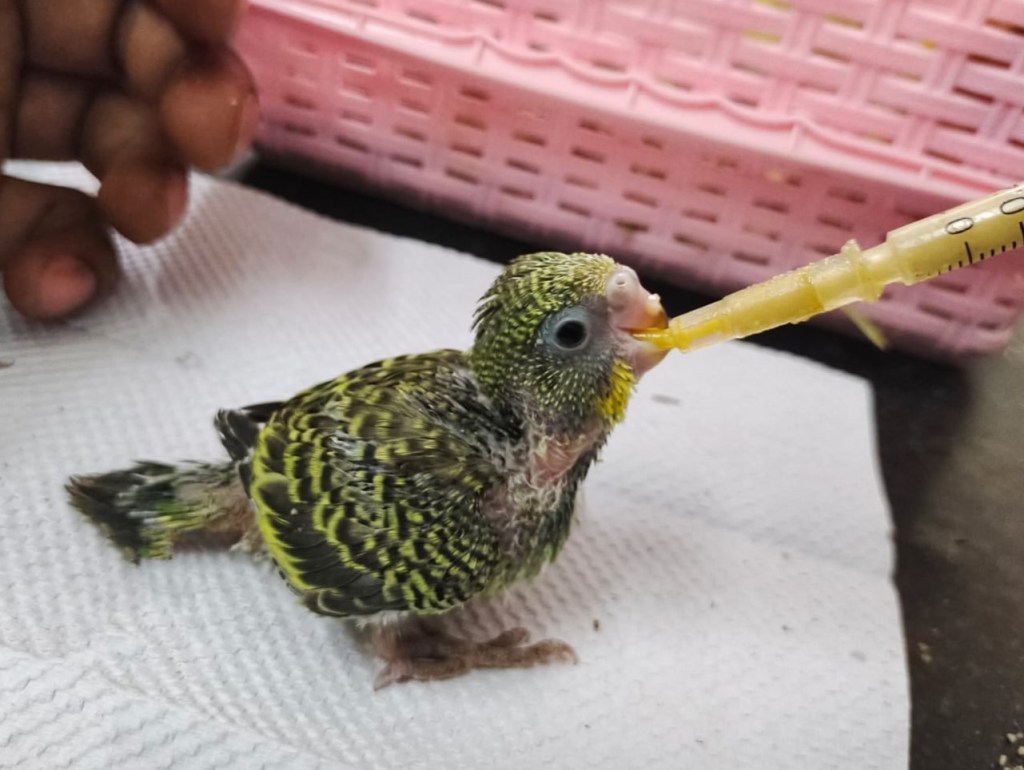
Use a feeding syringe: These tools allow you to control the amount of formula you’re giving the baby and prevent overfeeding. You can use a 1 ml syringe with a scalp vein cut off at about 2 cm as shown in the image below.
Warm the formula: Make sure the formula is warm, but not hot, before feeding it to the baby. You can warm it by placing the bottle in a bowl of warm water or using a bottle warmer.
Formula consistency and temperature: The consistency of the formula for hand-feeding budgerigar babies should be thick but not too thick. It should be thin enough to flow easily through the feeding syringe, but not so thin that it runs off the baby’s beak or spills out of the crop. You can test the consistency of the formula by squeezing a small amount onto a spoon or plate. If it holds its shape and doesn’t run off, it’s the right consistency. As for temperature, it’s important to make sure the formula is not too hot or too cold. If the formula is too hot, it can cause digestive problems for the baby, such as crop burn. If the formula is too cold, it can slow down the baby’s metabolism and make it difficult to digest. The ideal temperature for the formula is around body temperature, or around 98-99°F / 36-37.5°C . You can test the temperature of the formula by dripping a small amount onto the inside of your wrist. If it feels warm but not hot, it’s the right temperature.
It’s also important to mix the formula according to the instructions on the package. Different brands of formula may have different mixing ratios, and it’s important to follow these instructions to ensure the baby is getting the right balance of nutrients.
Hold the baby upright: While you’re feeding the baby, make sure it’s held upright so that the formula flows easily into its crop (a pouch in its neck).
Be gentle: Be gentle when administering the formula, as the baby’s crop and beak are delicate. Ensure the feeding apparatus does not harm the baby.
As for feeding schedules, it’s important to follow a consistent routine. You should feed the baby every two to three hours, starting from when it wakes up in the morning. As the baby grows, you’ll need to gradually increase the amount of formula you feed it.
Risk of aspiration
Aspiration is a serious risk when hand-feeding budgerigar babies. It occurs when formula or other substances enter the baby’s airways, causing respiratory distress and potentially leading to death. Aspiration can be caused by improper feeding techniques or equipment, such as using a feeding syringe or eyedropper that is too large or not holding the baby correctly while feeding.
To prevent aspiration, it’s important to follow proper feeding techniques and use the appropriate equipment. Here are some tips to keep in mind:
Use a small feeding syringe: A small feeding syringe will allow you to control the amount of formula you’re giving the baby and prevent overfeeding.
Always hold the baby upright: While you’re feeding the baby, make sure it’s held upright so that the formula flows easily into its crop (a pouch in its neck). This will help prevent the formula from entering the baby’s airways.
Careful handling: Be gentle when administering the formula, as the baby’s crop and beak are delicate. Avoid pressing too hard on the feeding syringe or eyedropper, as this can cause the baby to aspirate the formula.
Don’t force feed the baby: If the baby resists feeding or appears full, don’t force it to take more formula. This can increase the risk of aspiration.
By following these tips and being careful when hand-feeding your budgerigar baby, you can help reduce the risk of aspiration. However, it’s important to always be vigilant and watch for signs of respiratory distress, such as coughing, sneezing, or difficulty breathing. If you notice any of these symptoms, stop feeding immediately and seek veterinary care as soon as possible.
Brooder Management
The brooder is the baby’s home, and it’s important to keep it clean and comfortable. Here are some tips for managing the brooder:
Maintain the temperature: As mentioned before, budgerigars are sensitive to temperature fluctuations. Keep the brooder set to around 32-35°C and monitor the temperature using accurate thermometer. If you do not have a commercial brooder, you can use heat lamps or heat pads to set up heating. Do not place babies in direct contact with the heat source.
Maintain the humidity: Maintaining appropriate humidity in the brooder is important for the health and well-being of hand-raised budgerigar babies. High humidity can lead to respiratory problems, such as pneumonia, while low humidity can cause dry skin and respiratory irritation. To maintain appropriate humidity in the brooder, you can use a hygrometer (a device that measures humidity) to monitor the humidity level. The ideal humidity range for budgerigar babies is around 50-60%. If the humidity is too high, you can use a fan to increase ventilation and reduce moisture. If the humidity is too low, you can use a humidifier to increase the moisture in the air.
In addition to monitoring and controlling the humidity in the brooder, it’s also important to monitor the baby for signs of respiratory problems, such as coughing, sneezing, or difficulty breathing. If you notice any of these symptoms, stop feeding immediately and seek veterinary care as soon as possible.
Keep the brooder clean: Clean the brooder regularly to prevent the buildup of bacteria and germs. This includes wiping down the surfaces, changing the bedding, and replacing any soiled food and water dishes.
Provide plenty of ventilation: The brooder should have good airflow to prevent the buildup of moisture and reduce the risk of respiratory infections.
Hygiene Management
Good hygiene is essential for preventing the spread of germs and illness in hand-raised budgerigar babies. Here are some hygiene-related tips to keep in mind:
Wash your hands: Before handling the baby or any of its supplies, make sure to wash your hands thoroughly with soap and water.
Clean the baby’s beak and face: After each feeding, gently wipe the baby’s beak and face with a damp cloth to remove any formula. This will help prevent the buildup of bacteria and keep the baby clean and healthy.
Disinfect feeding equipment: Make sure to regularly disinfect any equipment you use to feed the baby, such as the feeding syringe or eyedropper, to prevent the spread of germs.
Weaning
As the baby grows, it will eventually need to be weaned off the formula and onto a diet of seeds and vegetables. This process can take several weeks, and it’s important to be patient and consistent. Here are some tips for successful weaning:
Introduce solid food gradually: Start by introducing small amounts of chopped vegetables and seeds to the baby’s diet. Gradually increase the amount of solid food as the baby becomes more accustomed to it.
Continue to feed formula: While you’re weaning the baby, continue to offer formula at regular intervals to ensure it’s getting enough nutrition. Keep an eye on the baby’s weight: It’s important to monitor the baby’s weight during the weaning process to make sure it’s gaining enough. If the baby starts losing weight or appears lethargic, it may not be getting enough nutrition.
Conclusion
Hand-raising a one-week-old budgerigar requires a lot of time and attention, but it can be a rewarding and fulfilling experience. By following these steps and providing the baby with proper care and nutrition, you can help it grow into a healthy and happy adult bird. With the right supplies, feeding techniques, and management practices, you can give your hand-raised budgerigar baby the best chance of success.
 WILDROOST
Leave a comment