
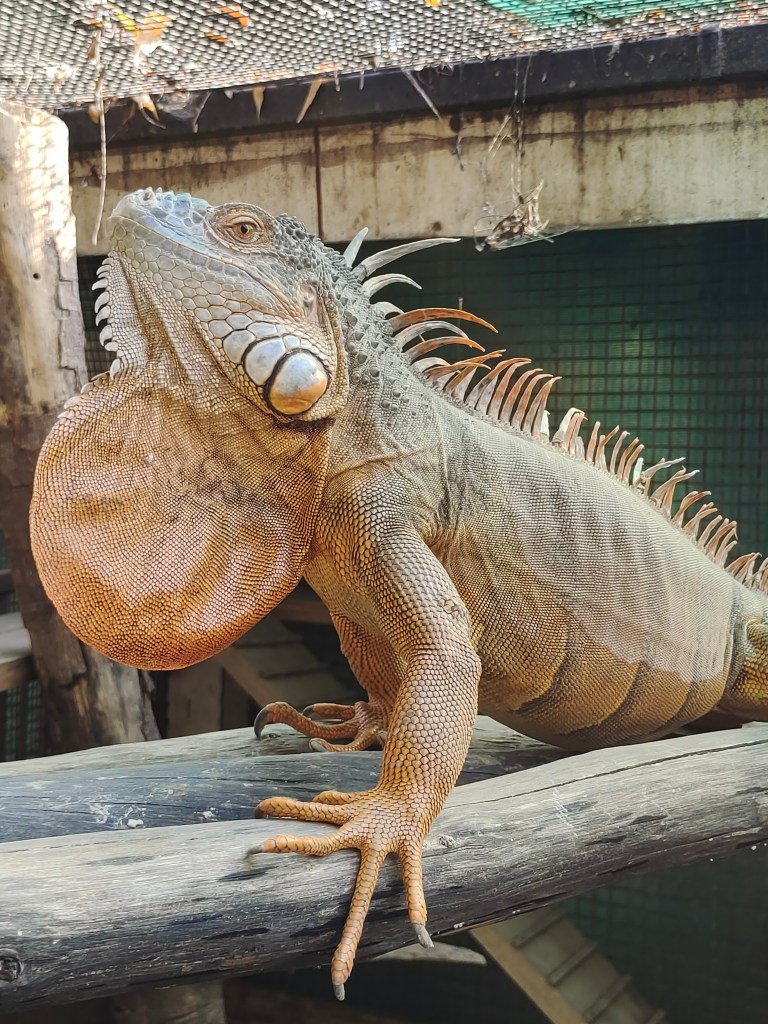
Green iguanas are a fascinating species, native to South and Central America and are classified as Least Concern on the IUCN Red List due to their extensive distribution, large population, and invasive range expansion. Weighing in at an average of 7kg, green iguanas can grow up to 2m in length, with their tails accounting for over two-thirds of their body size. These lizards are known for their vibrant green coloring in youth, which matures to a dull green, brown, or even orange as they age. Male green iguanas also have a noticeable dewlap and a dorsal crest along their spine. With their striking appearance and impressive size, green iguanas make for captivating pets and are a popular choice among reptile enthusiasts. In this article, we will delve into the care, husbandry, and management of these amazing animals, bringing you the latest research and insights on how to provide the best possible home for your green iguana companion.
Iguana Housing
It is important to provide green iguanas with a suitable enclosure that allows them to exhibit their natural behaviors and meet their physical needs. Green iguanas are arboreal and prefer to perch on horizontal branches, so it is important to include a variety of branches of different widths in their enclosure. It is also important to provide hiding places, such as logs and dense foliage, for juveniles. As males may become more aggressive and territorial as they mature, it may be necessary to separate them from females and other males. It is important to use wire mesh with small enough squares to keep large rodents out and secure the iguanas inside, but not so small that the iguanas’ nails can get stuck or their toes and noses can become injured. It is also important to avoid using toxic plants in the enclosure and to ensure that edible plants are not destroyed by the iguanas. The enclosure should be spacious enough to create a temperature gradient and allow the iguanas to regulate their body temperature. It should also be oriented towards the sun and protected from wind and rain. The substrate in the enclosure should not be something that can adhere to the iguanas’ tongues, as they will lick their surroundings and may ingest indigestible chemicals or materials. If you are keeping your iguana in a smaller cage for temporary holding, suitable substrate options include newspaper printed with non-toxic ink, paper towels, carpet scraps, and sphagnum moss. It is important to provide a strong branch or platform for the iguanas to bask on and to include a basking spot with a heat lamp if necessary. It is also important to provide a clean, easily accessible water source and to offer a varied diet that includes leafy greens, vegetables, and protein sources. It is essential to monitor the iguanas’ behavior and health and to seek veterinary care when necessary.
Enclosure Furnishing
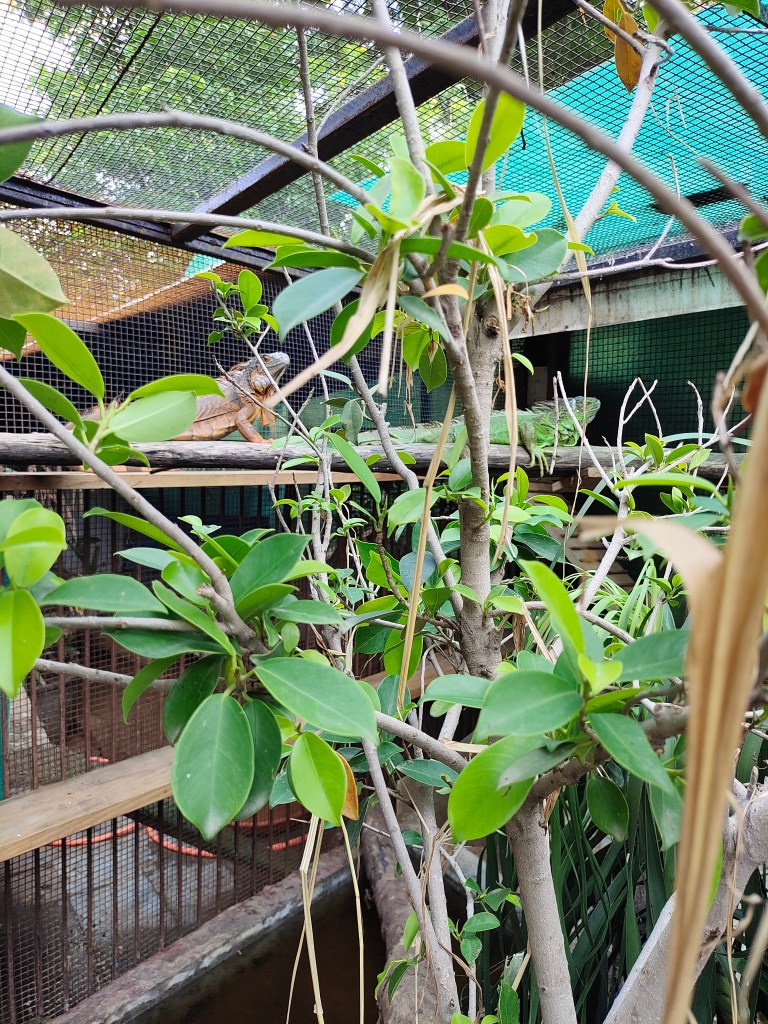
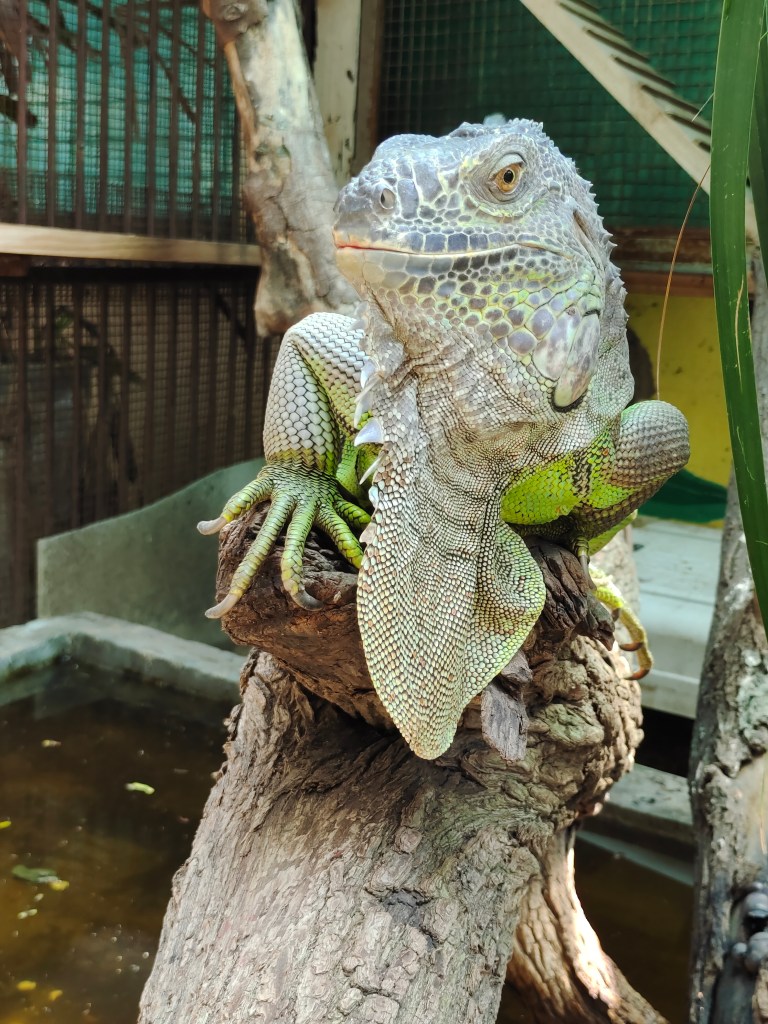
Proper furnishing of the enclosure is crucial for the health and well-being of green iguanas. As arboreal animals, they require a variety of vertical and horizontal branches to climb and bask on. These branches should be as broad as the iguana and securely fastened to the enclosure. Flat wooden ledges at different levels can also provide basking spots for the iguanas. Flat-bottomed rocks can help to wear down their toenails, which may otherwise need to be trimmed in captivity. It is also important to include a pool or water source in the enclosure where the iguana can submerge itself if needed. During breeding season, it is necessary to provide a substrate of sand or dirt for females to lay their eggs in. If space is limited, a large box or overturned garbage bin filled with the appropriate nesting material can be used as an indoor nesting area. It is also important to include plenty of green foliage and vines for baby iguanas to hide in. Using plants native to the iguana’s habitat, such as hibiscus, can help to create a more naturalistic environment for them. By providing the necessary furnishings and features, you can create a comfortable and enriching enclosure for your green iguanas.
Sexing and Housing in Pairs
When it comes to housing green iguanas, it is important to consider their sexes. Males have significantly larger ventral femoral pores than females, and begin to develop hemipenal bulges at around 14-16 months of age. These differences may be more subtle in juveniles. Males also tend to be larger than females. It is important to never house males together, as they can become territorial and may fight each other violently. Even a constant visual contact with another male can cause stress and health issues. Female iguanas can usually be housed together as they are less prone to fighting over territory or food. However, it is still important to provide them with an appropriately sized enclosure to ensure their safety and well-being. To reduce the risk of male mating violence, it is often recommended to house two females with one male. It is important to carefully consider the housing needs of your iguanas based on their sexes and to provide them with the proper environment to promote their health and happiness.

Temperature and Humidity
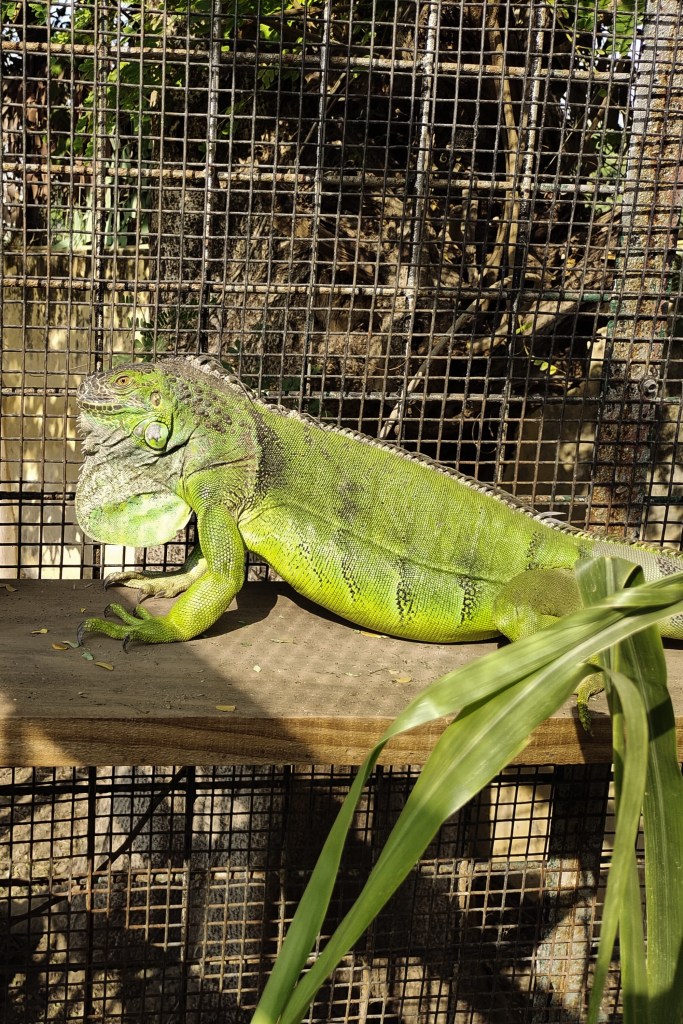
Proper temperature and humidity control is essential for the health and well-being of green iguanas. These lizards are capable of tolerating high temperatures of up to 45°C during the summer, as long as they have access to shade, an air cooler, and regular misting. They can also be kept outside during the non-peak winter months without heating, as long as they have access to unfiltered sunlight to bask and warm themselves. However, during peak winter months when temperatures drop below 20°C, it may be necessary to provide a heat lamp and UV lamp during the day or to bring the iguanas indoors. When housing green iguanas indoors, the temperature should be kept between 25-30°C, with a heat source provided in one corner to create a temperature gradient for the iguanas to regulate their body temperature. Young iguanas require a more humid environment, with humidity levels of 70-80% recommended. Sub-adult and adult iguanas can tolerate lower humidity levels of around 50%, as long as they have access to misting and fibre sheets on the sides of their enclosure to trap humidity without blocking out sunlight. It is important to carefully monitor and control temperature and humidity levels to ensure the optimal environment for your green iguanas.
Lighting, Heating, and UV
Proper lighting and heating is essential for the health and well-being of green iguanas. Like all living species, they require light and heat for physiological and psychological well-being. Sunlight provides important vitamin D and allows for thermoregulation, and reptiles, including iguanas, have evolved physical traits and habits that optimize their exposure to sunlight for vitamin D production and other benefits. In captivity, it is essential to provide a source of UVB light to promote vitamin D3 production and avoid metabolic bone disease. Green iguanas have a daily photoperiod of 12 hours of light and 12 hours of darkness, and it is important to maintain this cycle to support their physical and behavioral health. In addition to UVB light, iguanas also require UVA light, which aids in the regulation of behaviors such as feeding, diurnal mobility, and mating. When providing light and heat in captivity, it is important to coordinate the two and allow for a thermal gradient so that the iguana’s entire body can fit into the optimal temperature range. Basking lamps with broad, flood-style beams or multiple lamps over the basking area may be necessary to provide sufficient UV, visible, and infrared radiation to cover the animal’s body. It is important to monitor the amount of heat produced to prevent overheating or under-heating, both of which can be harmful to the iguana. By providing the appropriate lighting and heating, you can create a comfortable and enriching environment for your green iguanas.
Diet
In the wild: Green iguanas are primarily herbivorous in the wild, with a diet consisting mostly of green leafy plants, fruits, and flowers. They may occasionally consume insects or small amounts of carrion, but this is not a preferred part of their diet. Their digestive system is adapted to metabolize a high-fiber herbivorous diet, and they obtain some of their water requirements from the foods they eat. In the wild, green iguanas feed on the leaves, fruit, and flowers of a variety of trees, vines, and bushes. Studies have shown that while they consume a wide variety of species, their stomach contents often contain just one or two species at a time, leading to the hypothesis that they have a diverse diet over a period of days rather than daily. Green iguanas are most active in feeding during the late morning and early afternoon. It is important to replicate this diverse and varied diet in captivity to ensure the health and well-being of your green iguana.
In captivity: When it comes to feeding green iguanas, it’s important to remember that they are primarily herbivorous and should have a diet that is mostly composed of leafy greens. However, they can also benefit from occasional servings of vegetables and fruits. It’s important to avoid letting iguanas self-select their food, as they may not make nutritionally balanced choices. Instead, their diet should be carefully planned and balanced to ensure that they are getting all the nutrients they need. In general, the staple diet for iguanas should be made up of about 80% leafy greens and 20% vegetables, with fruits being given occasionally as treats. It’s also important to provide access to clean water every day and to consider using supplements like multivitamins and calcium under the guidance of a veterinarian. Finally, remember that iguanas need to be fed enough to support their growth and weight gain, but not so much that they become obese. Overall, by following a carefully planned and balanced diet, you can help ensure that your iguana stays healthy and happy.
Iguana diet can be divided into three categories:
1. Staple (to be given every day)
80%: Alfalfa leaves, Amaranthus (pigweed) leaves, Mustard greens, etc.
20%: French beans, butter beans, spring beans, long beans, cluster beans, snowpeas, and snap peas.
2. Occasional (to be given twice a week mixed with staple diet)
20% of total diet: Basil, peppermint, carrot, pumpkin, broccoli, beetroot, capsicum, thorn-less cactus pads, hibiscus flowers and leaves, mulberry leaves, melons.
3. Rarely (to be given not more than once a week mixed with staple diet).
10% of total diet: Banana, apple, grapes, papaya, figs, etc.
When it comes to feeding your iguana, it’s important to remember that they do not chew their food and so it’s important to cut or grate it into small, appropriate-sized pieces. It’s also important to remove any seeds or pits from fruit before feeding it to your iguana. To ensure a balanced diet, it’s a good idea to mix a variety of foods together in a large container, rather than allowing your iguana to self-select certain items. On days when you are feeding your iguana fruits or treats, aim for a food composition of 70% leafy greens and veggies, 20% veggies, and 10% fruits or treats. If you’re having trouble finding fresh leafy greens during certain seasons, you can use commercially available frozen mixed vegetables as an alternative, just be sure to thaw them before feeding.
It is important to make sure you’re feeding your iguana enough to support their growth and weight gain, but not so much that they become overweight. Baby iguanas tend to grow quickly, so you should be able to see noticeable growth in them on a monthly basis. It’s generally recommended to feed hatchlings and juveniles daily until they reach 18 months of age, at which point they can be fed every other day like adults. If you have a group of iguanas of different ages living together, you may need to continue feeding them daily until all of them reach around 18 months old. As for adult iguanas, they can be fed daily as long as you’re careful to avoid overfeeding and obesity. Just be sure to monitor your iguana’s weight and adjust their feeding accordingly.
Hygiene
Green iguana cages should be spot cleaned daily, which involves removing the water bowls and food dishes, and cleaning them with detergent and warm water. Once a week, the food bowls should be disinfected and sterilized to prevent the spread of disease. The cage must be thoroughly cleaned by wiping down all walls, furnishings, and removing any damaged or dirty substrate at least once a week. Cleaning solutions must be appropriately diluted prior to use.
Health monitoring
As a caregiver for green iguanas, it’s important to perform daily non-invasive check-ups to ensure your pets are healthy and happy. During these check-ups, be sure to observe the movement of all limbs, check for any injuries or abnormalities, and ensure the eyes and nose are clear of discharge. Additionally, pay attention to the consumption of food, the color and odor of feces, and any discharge from the cloaca. It’s also important to monitor for any signs of weight loss or abnormal joint swelling, as well as the iguana’s general behavior and demeanor. It’s especially important to keep an eye on these things during breeding season for females, as well as any difficulties with urination or defecation. By performing these daily check-ups, you can catch any potential health issues early on and provide the necessary care for your iguana.

 WILDROOST
Leave a comment